
 Register or login




Torrevieja information
1. Introduction: What and where is Torrevieja?
Torrevieja is a vibrant coastal city on the Spanish Costa Blanca, in the province of Alicante. Situated on the Mediterranean Sea, between Guardamar del Segura and Orihuela Costa, the city is surrounded by unique salt lakes that contribute to its particularly dry and healthy microclimate. Those seeking clear sea views, guaranteed sunshine, and a relaxed lifestyle will find Torrevieja an attractive place to live, spend the winter, or vacation.
What distinguishes Torrevieja from many other seaside resorts on the Spanish coast is that it is not only a tourist attraction but also a city with a permanent character. Not only Spaniards live here, but also thousands of foreigners—including many Dutch, Belgians, Britons, and Scandinavians—who have chosen to live on the Costa Blanca. As a result, Torrevieja feels like an international city with a local soul: a place where one quickly feels at home, regardless of background or age.
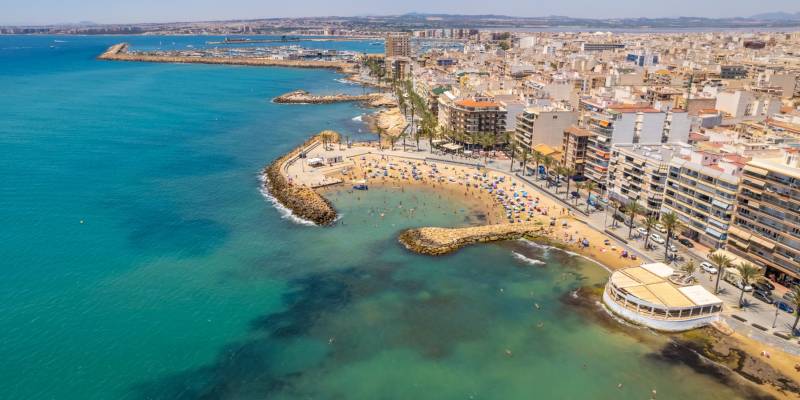
The city presents a varied picture: a lively centre with markets, shops, and restaurants, wide sandy beaches with long promenades, but also quiet residential areas and nature reserves. The infrastructure is well-developed, with a hospital, schools, sports facilities, and a wide range of recreational activities. Thanks to this combination of sun, sea, amenities, and an international atmosphere, Torrevieja has grown into a popular destination for people considering buying a property on the Costa Blanca.
2. History of Torrevieja
The history of Torrevieja is closely linked to the sea, salt, and watchtowers. The name Torrevieja literally means “old tower” and refers to a watchtower that stood along the coast in the Middle Ages to protect the region from pirates. Where a vibrant city now stands, for centuries there was a vast and sparsely populated area, inhabited by only a few fishermen and salt workers. It was not until the 18th century that Torrevieja began to develop as a permanent settlement, partly due to the rise of the salt industry.
Real growth began in the early 19th century, when the Spanish government decided to relocate salt production to this area. The salt lakes of Torrevieja – known as Las Salinas – proved ideal for large-scale sea salt production. To this day, salt production plays an important economic role in the city. The iconic mountains of white salt at the edge of the lake are not only impressive to behold but also symbolize the city's industrial heritage.
During the 20th century, Torrevieja transformed from a working-class community into a modern seaside resort. The construction of the port, the laying of roads, and later the rise of tourism led to rapid expansion. Particularly from the 1980s onwards, more and more foreigners came to the region, attracted by the favorable climate and affordable real estate. This has ensured that today Torrevieja is a multicultural city with a rich history and a modern character.
Although Torrevieja is a young city in many respects, its past is still kept visible and palpable. In the center, there are still several historic buildings, such as the old salt factories, the cultural center, and churches that recall the city's humble beginnings. There are also various museums and exhibitions that tell the story of how a simple coastal town grew into a beloved destination on the Costa Blanca.
3. Location, nature and climate of Torrevieja
Torrevieja is located in southeastern Spain, on the famous Costa Blanca, between the cities of Alicante and Cartagena. The city is part of the Vega Baja del Segura region, a fertile coastal strip featuring a combination of agricultural areas, nature parks, and urban developments. Torrevieja's geographical location is unique: it is not only situated directly on the Mediterranean Sea but is also surrounded by two large salt lakes, Laguna Salada de Torrevieja and Laguna de La Mata. These natural elements define not only the landscape but also the living environment.
The salt lakes are part of a protected nature reserve and form an important ecosystem for birds such as flamingos, storks, and ducks. Especially in spring and autumn, the lakes are a popular spot for nature lovers and hikers. The contrast between the white-pink water surfaces of the lagoons and the blue sea view along the coast gives Torrevieja a distinctive visual character found in few other coastal towns in Spain.
What makes Torrevieja attractive to many people is its exceptionally healthy climate. According to the World Health Organization, this region is one of the healthiest places to live in Europe. The combination of salty air, a dry atmosphere, and abundant sunlight has a beneficial effect on people with respiratory problems, joint complaints, or skin conditions. Many winter visitors report that their health noticeably improves after a few weeks' stay in this area.
The climate of Torrevieja is officially Mediterranean, but tends towards semi-arid. This means warm summers, mild winters, and very little rainfall. The sun shines here on average more than 300 days a year, making it an ideal location for people who want to enjoy outdoor activities all year round. The proximity to both the sea and nature gives residents plenty of freedom to walk, cycle, sail, or simply relax in the open air.
Due to the combination of a favorable geographical location, protected nature reserves, and a stable sunny climate, Torrevieja is attractive not only to tourists but also to people seeking a healthier and more active lifestyle on the Costa Blanca.
4. Population and international community in Torrevieja
Over the past few decades, Torrevieja has grown into one of the most international cities in Spain. What once began as a small fishing community now has over one hundred thousand registered residents, a large proportion of whom come from other countries. This international community is a defining feature of daily life in Torrevieja and makes the city attractive to people seeking a multicultural, accessible living environment.
A significant percentage of the population consists of European expats, with large groups of Britons, Germans, Scandinavians, Belgians, and Dutch. There are entire urban areas where certain nationalities form the majority, making it easier for newcomers to feel at home quickly. Many shops, doctors' practices, restaurants, and services cater to this diversity with multilingual communication and a wide range of cultural offerings. Even at municipal services, it is often possible to receive assistance in languages other than Spanish.
This international presence creates a social dynamic that is unique for a city of this size. There are countless associations, sports clubs, and cultural groups geared towards specific nationalities or interests. From Dutch reading clubs to Scandinavian walking groups, those living in Torrevieja quickly connect with like-minded people. At the same time, there is ample room for integration into local Spanish life. The city has a friendly and open character, where people from different backgrounds come together without cultural tensions.
The presence of many foreigners also means that certain facilities and infrastructure are particularly well-developed. Think of international schools, medical centers with multilingual staff, and real estate agencies specializing in assisting foreign buyers. As a result, Torrevieja is particularly accessible to people who are emigrating, spending the winter here, or looking for a second home on the Costa Blanca.
This mix of nationalities, combined with the city's local character, makes Torrevieja a dynamic and inclusive place to live. It is a city where international life blends with Spanish traditions, and where everyone—regardless of origin—can feel welcome.
5. Tourism and sights in Torrevieja
Torrevieja has grown into a popular tourist destination on the Costa Blanca, thanks in part to the climate, the beaches, and the welcoming atmosphere. Every year, hundreds of thousands of visitors flock to the city, ranging from families on summer holidays to winter visitors and day-trippers from surrounding regions. The city manages to appeal to a broad audience by offering both tourist facilities and authentic Spanish charm.
One of Torrevieja's biggest attractions is its vast sandy beaches. Playa del Cura, Playa de Los Locos, Playa de la Mata, and Playa del Acequión are among the most visited beaches in the region. These beaches are well-maintained, equipped with facilities such as showers, lifeguards, and beach bars, and are often within walking distance of shops and restaurants. The long promenades running along the beaches are popular for sunset walks, offering sea views and cozy terraces.
In addition to the coastline, Torrevieja also has cultural and recreational attractions. The Salt Museum tells the story of the salt industry that shaped the city, and the port is a pleasant place to stroll, eat, or take a boat trip. In the summer, there are often markets and festivals in the city center, including music nights, folk parades, and open-air concerts. The night market on the boulevard is a popular place to buy souvenirs, local products, and handicrafts.
There are also plenty of activities for families with children. For instance, the city features a water park, playgrounds, a go-kart track, and mini-golf courses. Additionally, there is a large shopping center just outside the city where you can find both Spanish and international brands. Furthermore, the presence of parks and nature reserves, such as the Lagunas de La Mata y Torrevieja Natural Park, offers opportunities for relaxation and experiencing nature.
What appeals to many visitors is that Torrevieja is alive all year round. Unlike some coastal towns that feel empty outside the high season, Torrevieja has a stable population and a permanent supply of restaurants, bars, and shops. This makes it not only a suitable holiday destination but also an attractive place for longer stays.
Tourism is and remains an important engine for the city, but thanks to the wide range of offerings and the moderate pace of life, Torrevieja does not feel like a typical tourist factory. It is precisely this balance between vibrancy and liveability that appeals to many people.
6. Local economy and employment in Torrevieja
The economy of Torrevieja rests on multiple pillars, the most important of which is tourism. However, the salt industry, construction sector, healthcare, and retail also play a major role in the city's economic structure. This mix ensures employment opportunities for both local residents and international residents wishing to settle here.
Tourism generates many jobs in the hospitality, hotel, retail, and service sectors. During the summer months, the demand for staff increases sharply, particularly in restaurants, shops, tourist information offices, and leisure businesses. People with multilingual skills—such as English, German, or Dutch—often have an advantage because they can communicate with the diverse international visitors. This makes Torrevieja attractive to expats or temporary residents seeking work in an environment with many foreigners.
A traditional economic sector that is still active in Torrevieja is the salt industry. The city's salt lakes are among the largest natural salt extraction areas in Europe. Although the number of jobs in this sector is limited, it remains symbolically and economically important to the city. Salt production is partly exported and partly used for local applications, and contributes indirectly to tourism through educational excursions and museums.
The construction sector, as in other parts of Spain, experiences peaks and valleys. Due to the continuous demand for housing, both for sale and rent, there is a lot of activity in new construction projects and renovations. Real estate agents, contractors, electricians, plumbers, and interior design companies benefit from the constant stream of new residents and investors.
Care and well-being are other important economic pillars. Due to the presence of many pensioners and winter residents, there is a high demand for medical care, home care, pharmacies, and support services. Many health centers in Torrevieja have multilingual staff and focus specifically on the needs of foreign residents.
Small independent entrepreneurs also find space in Torrevieja. There are many freelancers, service providers, and small businesses active in sectors such as real estate, coaching, wellness, legal services, and translation. The presence of coworking spaces and networking groups helps entrepreneurs make connections and promote their services.
Torrevieja therefore offers a broad economic landscape in which tourism, healthcare, construction, and services complement one another. For those seeking work, wishing to start a business, or establishing themselves as service providers, there are plenty of opportunities—especially if you speak the language or target the international community.
7. Daily life and lifestyle in Torrevieja
Daily life in Torrevieja is characterized by a relaxed pace, plenty of outdoor living, and a strong sense of community. Unlike busy metropolises, there is a friendly atmosphere here where people take time for each other, for their health, and to enjoy the moment. The city offers everything you need to live comfortably, whether you live there permanently or only stay for part of the year.
An important aspect of life in Torrevieja is the climate. Thanks to the many hours of sunshine, residents spend most of the day outdoors. This means having breakfast on a terrace, walking along the boulevard, exercising in the open air, or simply enjoying a cup of coffee by the sea. There are plenty of walking routes, parks, and seating areas scattered throughout the city, allowing you to unwind anywhere. This outdoor lifestyle has a direct impact on one's lifestyle: making it more active, social, and healthier.
The city has a wide range of shops and amenities. Daily shopping is often done at the local markets or at one of the many supermarkets. All well-known chains are represented in the city center, while in the suburbs you mainly find small, local shops. The weekly market in Torrevieja is one of the largest in the region and attracts not only tourists but also many permanent residents who buy their vegetables, fruit, clothing, and household goods there.
The hospitality industry is an integral part of daily life. From simple tapas bars to modern restaurants, food plays a central role in the social culture of Torrevieja. Lunch remains the most important meal of the day here, often followed by a moment of rest in the afternoon. Evenings are relaxed, with walks along the boulevard and dinners with friends or family. In many neighborhoods, neighbors still know each other by name, and social connections form naturally through neighborhood activities or informal gatherings.
Sports and health are also well represented. There are sports fields, fitness clubs, tennis courts, and swimming facilities. Cycling is becoming increasingly popular, partly due to the flat terrain and the construction of new cycle paths. In addition, the city offers opportunities for yoga, nature walks, and water sports. For the elderly, there are senior clubs and public activities that help them stay active.
The pace of life in Torrevieja is noticeably slower than in Northern Europe. For many people, this is precisely one of the major advantages: less stress, more room for one's own rhythm, and a greater awareness of quality of life. This lifestyle makes the city popular not only with retirees but also with families and working people seeking a better work-life balance.
8. Events and culture in Torrevieja
Torrevieja is not only a sun destination, but also a city with a rich and vibrant cultural life. Throughout the year, countless events take place in the city, ranging from traditional Spanish celebrations to modern festivals and international activities. This cultural agenda gives Torrevieja a dynamic character and ensures that there is always something to do, regardless of the season.
One of the most impressive events in Torrevieja is Semana Santa, Holy Week before Easter. During this period, daily processions take place in which religious statues are carried through the streets, accompanied by music and symbolism. The parades attract both residents and visitors and offer a unique glimpse into Spain's deep-rooted religious traditions. Even people without a religious background experience these events as special and impressive.
In addition to religious festivals, Torrevieja hosts numerous other festivals. During the summer months, there is an activity almost every weekend: from open-air concerts in the central square to food truck festivals, fireworks displays, and dance performances on the boulevard. There are also multicultural events where people of various nationalities present their cuisine, music, and dance. This fits perfectly with the international character of the city.
Music lovers in Torrevieja can visit the internationally renowned Certamen Internacional de Habaneras y Polifonía, a singing festival that attracts choirs from all over the world. This tradition of sea shanties, known as habaneras, constitutes an important cultural heritage for the city. In addition, there are smaller musical events, jazz nights, and classical concerts, often organized in the Teatro Municipal or the cultural center.
There is also on offer in the field of visual arts. The cultural center of Torrevieja organizes exhibitions, lectures, and courses. Artists can exhibit their work, and visitors are invited to actively participate in the cultural life. Furthermore, there are regular open-air art markets and creative workshops for children and adults.
Markets also form a cultural anchor point in city life. In addition to the weekly market, there is also an evening market along the boulevard where handicrafts, jewelry, and local products are sold. These markets are more than commercial events: they are meeting places where residents and visitors come together, share stories, and soak up the local atmosphere.
What makes Torrevieja's cultural calendar special is that it is aimed not only at tourists, but also at the local population and foreign residents. This creates a balance between tradition and innovation, between local and international. Cultural life in Torrevieja is therefore an extension of daily life and a major reason why many people are drawn to this city.
9. Care and healthcare in Torrevieja
In recent years, Torrevieja has developed into a city with solid and accessible healthcare, which is a major reason why many people choose to live or stay there long-term. Especially for pensioners and winter residents, the presence of good medical facilities plays a crucial role in their decision to settle here. However, the city also offers all necessary care structures for families and working people.
The public health system in Torrevieja is well organized. The city hospital, the Hospital Universitario de Torrevieja, is one of the more modern hospitals in the region and is fully equipped with departments for emergency care, surgery, diagnostics, and specialized care. In addition, there are several public health centers (centros de salud) scattered throughout the city, where general practitioners and nurses treat patients by appointment.
For those using private healthcare, there are numerous private clinics and medical centers operating. These often offer shorter waiting times, more extensive services, and multilingual staff. Many of these centers specifically cater to the international community, with doctors and assistants who speak English, German, French, or Dutch. As a result, foreign residents feel better understood and helped, especially with medical issues that require clear communication.
Pharmacies are widely represented in the city and are often accessible outside regular opening hours. Service is generally fast and professional, and much medication is available without a prescription, depending on the product. This is a major advantage for tourists and temporary residents, as they can be helped quickly with minor health complaints.
In addition to regular healthcare, there is also a focus on well-being and prevention in Torrevieja. Numerous physiotherapy practices, osteopaths, nutritionists, and wellness centers are active. This aligns well with the lifestyle of many residents, who value health and active aging. Alternative therapies, such as acupuncture, homeopathy, and massage, are also available for those interested.
For emergencies, medical assistance is available 24 hours a day through both the public and private sectors. The presence of well-equipped ambulance services and rapid emergency care contributes to a sense of safety among residents and visitors.
The combination of stable infrastructure, a wide choice between public and private healthcare, and multilingual services makes Torrevieja one of the most care-friendly cities on the Costa Blanca. For people who value health, security, and professional medical guidance, the city offers everything needed.
10. Education and schools in Torrevieja
Torrevieja has a well-organized education system suitable for both Spanish families and international families settling here. For many expats and emigrating families, it is important to know what educational options are available, whether language support is provided, and how accessible the system is. The city offers a wide range of possibilities in this regard—from public schools to international institutions.
Spanish public education in Torrevieja is free and accessible to all children officially enrolled in the municipality. There are various primary schools (colegios públicos) and secondary schools (institutos) spread throughout the city. These schools provide education in Spanish and, in some cases, also in Valencian, the regional language. Children of foreign origin can often count on additional language support through special programs aimed at integration into the Spanish school system.
For families looking for education in other languages, there are also several international schools and private institutions in and around Torrevieja. These schools offer education in English, and sometimes in German or French, and often follow the British or international curriculum. This form of education is popular among expats planning temporary or long-term stays who wish to provide their children with an internationally recognized diploma.
In addition, there are opportunities for Dutch-speaking children to take extra lessons in their mother tongue through weekend or after-school programs organized by Dutch associations or educational networks in the region. This helps maintain ties with their own language and culture, which is especially important for families who eventually return to the Netherlands or Belgium.
Outside of formal education, there are also plenty of opportunities for adult education. Spanish language courses, IT training, creative workshops, and vocational training are offered at various locations. In addition, libraries and cultural centers regularly organize educational activities, including for seniors or retirees who wish to remain actively learning.
Access to education is well organized in Torrevieja, and the variety of options makes it possible to choose a school that suits the needs and background of the family. The availability of international options ensures that the transition to Spanish life does not mean giving everything up—it is precisely the combination of local and international elements that makes the educational offerings in Torrevieja particularly attractive.
11. Homes and real estate listings in Torrevieja
The real estate market in Torrevieja is particularly varied, making the city attractive to diverse target groups: from young families and retirees to investors and holidaymakers. Over the years, this place has grown into one of the most popular locations on the Costa Blanca for those considering buying a home in Torrevieja. There is a wide choice of property types, price ranges, and locations, meaning that virtually everyone can find a suitable housing solution here.
The city is made up of various neighborhoods and urbanizations, each with its own character. In and around the center, for example at Playa del Cura or El Acequión, you will primarily find apartments that are popular with people looking to buy an apartment in Spain and live close to the beach and amenities. These flats are often part of multi-story residential blocks, featuring balconies and views of the sea or city life. Such properties are suitable for both permanent residence and seasonal rentals.
In the suburbs of Torrevieja, such as Aguas Nuevas, Los Altos, or Los Balcones, the selection is wider. Here you will find more low-rise buildings, townhouses, bungalows, and detached villas. These neighborhoods are quieter, greener, and more spaciously laid out. Many homes have a garden, terrace, or even a private swimming pool. These neighborhoods are popular with families, winter residents, and people who value comfort and privacy.
New construction projects are primarily located on the outskirts of the city and in adjacent areas towards Orihuela Costa. These homes are built to modern standards, featuring energy-efficient installations, good insulation, and contemporary finishes. Many of these projects target international buyers and are offered with multilingual support and extensive guidance.
Torrevieja also offers options for those with a more limited budget. In older neighborhoods, apartments can be found that require renovation but are attractive to first-time buyers or investors. For renters, both furnished holiday apartments and long-term rentals are available, although demand is highly seasonal.
The real estate market in Torrevieja has remained stable, partly due to constant international demand. This makes it an interesting place for those looking to invest in real estate, particularly in the form of holiday rentals or winter residences. Local real estate agents and notary offices are accustomed to guiding foreign buyers and offer assistance with all legal and administrative steps.
In short: whether you are looking for a cozy apartment by the sea, a modern new-build home, or a villa in a quiet neighborhood, the housing supply in Torrevieja is broad and accessible. With the right guidance, finding a suitable home here is both achievable and attractive.
12. Cost of living in Torrevieja
One of the major advantages of living in Torrevieja is the relatively low cost compared to many Western European countries. For people from the Netherlands, Belgium, Germany, or Scandinavia, life here is generally more affordable, without having to compromise on quality or comfort. This makes the city particularly attractive to retirees, winter residents, and people looking for a quieter and more affordable existence in the sun.
Daily grocery shopping in Torrevieja is manageable on an average income. Local products such as vegetables, fruit, olive oil, fish, and meat are often cheaper than in Northern Europe, especially when buying them at the market or choosing Spanish brands in the supermarket. Large retail chains like Mercadona, Carrefour, Lidl, and Consum provide competition and keep prices relatively low.
Eating out is also affordable. A menu del día—a complete lunch with a starter, main course, and dessert—is still reasonably priced in many restaurants. Coffee on a terrace, tapas, or a glass of wine are fixed parts of social life and need not be a major drain on the budget. Especially outside the peak tourist season, there are many special offers and local eateries with attractive rates.
Rental prices vary depending on the neighborhood, the season, and the size of the home. Prices are higher in the city center and by the beach, while you are often better off in the suburbs or during the low season. For those wishing to stay longer, it is often worthwhile to look for a rental property outside the tourist center or to purchase a home.
Fixed costs such as water, electricity, and internet are generally affordable by Northern European standards, although costs here have also risen in recent years. The abundance of sunshine ensures that energy consumption for heating is limited, while air conditioning is often necessary in the summer. More and more homes are being equipped with energy-efficient systems and solar panels, which saves costs in the long run.
Healthcare costs can also turn out lower, especially when using the public system. Anyone registered in Spain with a health card pays little to nothing for medical care. Private health insurance in Spain is generally cheaper than in other European countries, offering extensive coverage and quick access to specialists.
All in all, Torrevieja offers a lifestyle that is within reach for many people. By managing your expenses wisely, you can enjoy a comfortable standard of living here, with room for relaxation, social contact, and well-being. For many, life on the Costa Blanca is not only more pleasant but also financially feasible.
13. Accessibility and transport in Torrevieja
Torrevieja is easily accessible, both for tourists and for people who want to live there permanently. The city is strategically located on the Costa Blanca, a short distance from major infrastructure hubs and with good connections within the region. This makes it easy to travel to Torrevieja and then get around locally, even without a car.
The nearest airport is Alicante-Elche, located about a forty-minute drive from the city. This international airport has direct connections to dozens of European cities, making it an important hub for both holidaymakers and permanent residents. Daily shuttle buses and taxi services run between the airport and Torrevieja, ensuring you arrive at your destination without any hassle. Murcia-Corvera Airport is also within reach and offers a good alternative.
Although Torrevieja does not have its own train station, there are bus connections to nearby cities such as Alicante, Murcia, Cartagena, and Orihuela. From these cities, you can travel on by train to other parts of Spain. Regional bus companies offer reliable and affordable rides, both for daily use and for longer distances. Within the city itself, a local bus network operates with stops at important locations such as shopping centers, hospitals, and beaches.
For those travelling by car, Torrevieja is well connected via the AP-7 motorway and the N-332 and CV-905 national roads. These roads provide a quick connection to other coastal towns and the interior. Parking is well organized in most neighborhoods, although it can be busier in the centre and at the beach during the summer months. Many residential areas and new construction projects feature private parking spaces or car parks.
Cycling and walking are becoming increasingly popular as means of transport within the city. Torrevieja is relatively flat and therefore easily navigable for cyclists. Moreover, the municipality is investing in the expansion of cycle paths and safe crossings. For shorter distances, walking is often the fastest and most pleasant way to get around, especially in the mild climate that invites you to be outdoors.
Taxis and car rental companies are widely available. During the summer months, it is advisable to book well in advance, especially for car rentals. For medical appointments or transport outside standard public transport hours, private transport services are also available, including options for people with reduced mobility.
Thanks to this excellent accessibility and user-friendly transport network, Torrevieja is not only a pleasant place to visit, but also a practical city to live in. Whether you rely on public transport, prefer to drive yourself, or do everything by bike – the infrastructure makes it possible.
14. Why do people choose Torrevieja?
Torrevieja has been attracting people from all over Europe for years. Some come for a relaxing seaside holiday, while others decide to spend the winter there or even live there permanently. The appeal of this city does not lie in a single characteristic, but in the unique combination of sunshine, amenities, accessibility, and quality of life. For many people, Torrevieja is not just a beautiful destination, but a place where life truly feels more pleasant.
One of the main reasons why people choose Torrevieja is its exceptionally favorable climate. The city enjoys more than 300 sunny days a year and has a dry, mild climate that is particularly attractive to people with health issues or those wishing to escape the cold, damp winters of Northern Europe. The presence of salt lakes contributes to a healthy microclimate that is experienced as beneficial by many residents.
In addition, Torrevieja offers a very accessible lifestyle. Everything you need is within reach: shops, medical care, schools, restaurants, and recreational facilities. Whether you are young or retired, single or with a family, the city is designed for comfort and convenience. Thanks to its flat terrain and efficient transport network, getting around is easy, even for people with mobility issues.
The international community is another factor that attracts many people. In Torrevieja, you rarely feel like an outsider. There are plenty of opportunities to meet people, continue speaking your language, and yet integrate into Spanish life. This balance makes it easier to make the transition to a new country, without feeling the need to completely abandon your own background.
Affordability also plays a role. Compared to many other European coastal towns, the cost of living and housing in Torrevieja is relatively low. As a result, the city is attractive not only to wealthy buyers but also to people on a limited budget looking for a fresh start or a high-quality life for less money.
Finally, Torrevieja offers freedom. The atmosphere is relaxed, there are few social barriers, and everyone is essentially accepted as they are. Whether you want to be active in community life, quietly enjoy the sun and sea, or start a business on the coast—in Torrevieja, there is room to shape your life according to your own wishes.
It is this versatility that ensures people not only come to Torrevieja, but also stay.
15. Conclusion: living, working, or staying in Torrevieja
Torrevieja is much more than a sunny seaside resort on the Costa Blanca. It is a city with a soul, shaped by a mix of cultures, a rich history, and a unique location between the sea and salt lakes. Whether you are looking for peace, adventure, affordable housing, or health benefits in a warm climate—Torrevieja offers it all.
In this guide, you have been able to read about the climate, the neighborhoods, the amenities, the culture, and daily life. What stands out is that Torrevieja is a city that adapts to the needs of its residents. Young or old, temporary or permanent, international or local: everyone finds their place there. The combination of accessibility, affordability, and quality of life makes it a unique destination on the Mediterranean.
For anyone considering settling here or staying here frequently, it is wise to start well-informed. Visit different neighborhoods, talk to people who already live there, and let yourself be guided by local professionals who know the city inside out. That way, you will discover for yourself why so many people choose to live in Torrevieja—and never want to leave.
Are you considering a future on the Costa Blanca?
Seek advice from experts specializing in living, working, and investing in Torrevieja. This way, you take the step not only with confidence but also with the feeling that you have arrived at the right place.
Read more articles about Torrevieja here:
Share

 Back
Back
 Download PDF